


Jun
Vitamin D is vital for strong bones, immune health, and overall vitality. But like many powerful nutrients, too much of a good thing can become a problem. Vitamin D toxicity—also called hypervitaminosis D—is rare, but when it happens, it can be serious.
A vitamin D overdose almost always comes from supplements, not from sunlight or food. As one clinician put it,
“The sun won’t give you vitamin D toxicity. The bottle might.”
This article walks you through what vitamin D does, how toxicity develops, who is at risk, what symptoms to watch for, and how to use vitamin D safely and wisely.

🌞 What vitamin D does & where it comes from
Vitamin D is a nutrient your body needs to build and maintain healthy bones. Without enough vitamin D, your body cannot properly absorb calcium—a primary component of bone health.
You can get vitamin D from:
- Food: fatty fish (like salmon), egg yolks, red meat, liver
- Fortified foods: milk, some cereals, and other fortified products
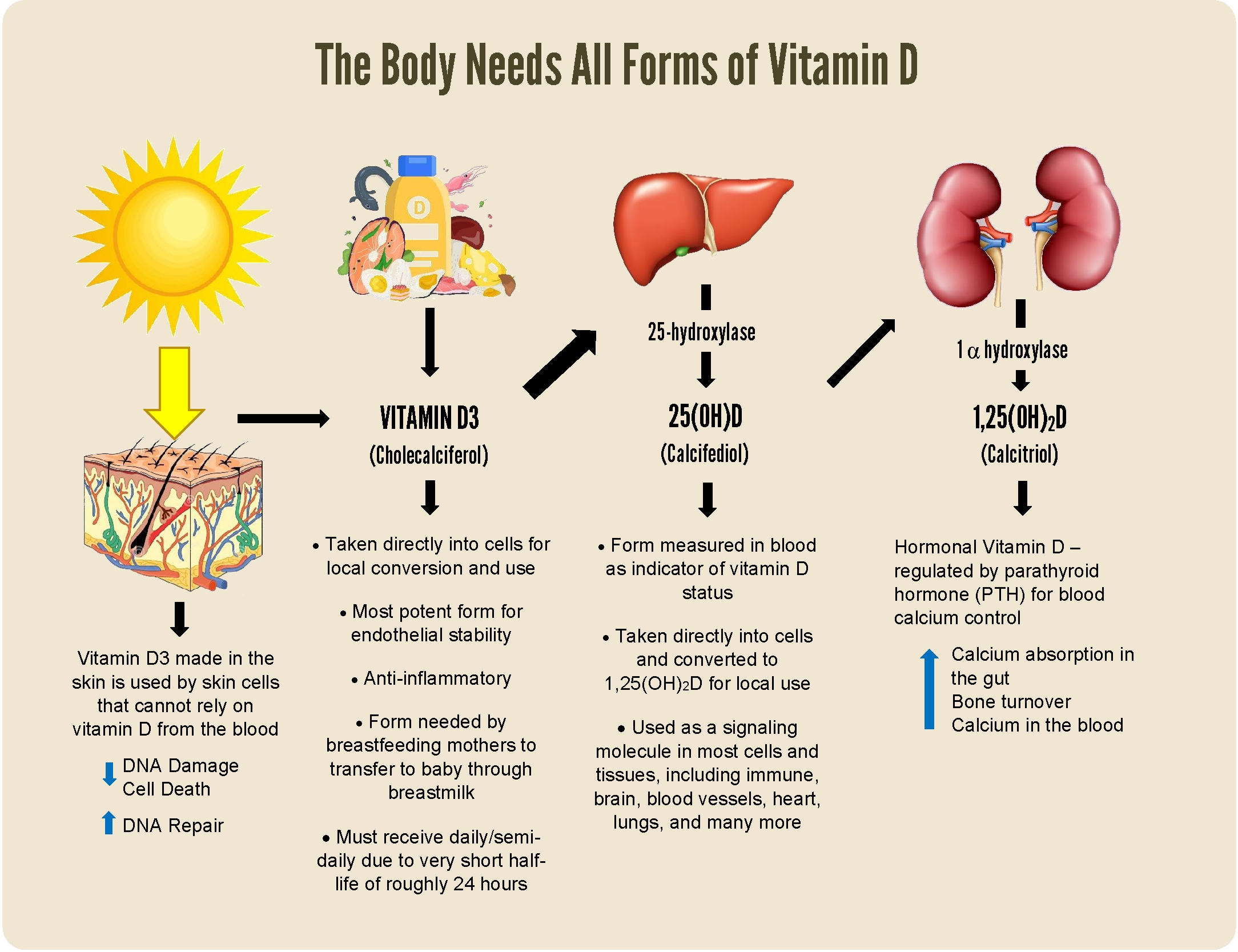
- Sunlight: when UV radiation converts chemicals in your skin into active vitamin D (calciferol)
- Supplements: vitamin D2 or D3 in various doses
Vitamin D2 vs. D3
The two common supplemental forms are:
- Vitamin D2 (ergocalciferol): from plant sources
- Vitamin D3 (cholecalciferol): from animal sources
They play the same role in the body, but D3 binds more effectively, making it a stronger source that can achieve the same health benefits at lower doses.
Who is more likely to be deficient?
Some people are at higher risk of not getting enough vitamin D, including:
- Those who cannot get outdoors (frail, homebound)
- People living in care facilities or correctional facilities
- Those who wear clothing that covers most of their skin when outdoors
- People with dark skin tones
- People with health conditions like chronic kidney disease or liver disease that impair vitamin D processing
Researchers suspect that people with darker skin tones get less vitamin D from sunlight because higher melanin levels limit the rate of skin synthesis—the process where the top layer of your skin (epidermis) activates vitamin D when exposed to UV radiation.
People in these groups can benefit from vitamin D supplementation throughout the year, not just in winter.


⚖️ How vitamin D toxicity happens (and why it’s rare)
Vitamin D toxicity is a rare but potentially dangerous condition. It occurs when someone has too much vitamin D in their body, usually from large doses of supplements over time. It does not occur from direct sun exposure or diet alone.
Many cases of toxicity are linked to:
- Inappropriate prescribing
- Not taking vitamin D as prescribed
- Use of high-dose or unlicensed preparations
With the increasing use of vitamin D treatments, incidents of toxicity have become more frequent—but they are still preventable with:
- Appropriate dosing
- Proper formulations
- Avoidance of unlicensed products
The main problem with too much vitamin D is that it can cause excessive absorption of calcium, leading to high calcium levels in the blood, a condition called hypercalcemia. This is often picked up early during routine blood work.
“Vitamin D toxicity is less about the vitamin itself and more about what it does to calcium.”

🚨 Most common symptoms of too much vitamin D
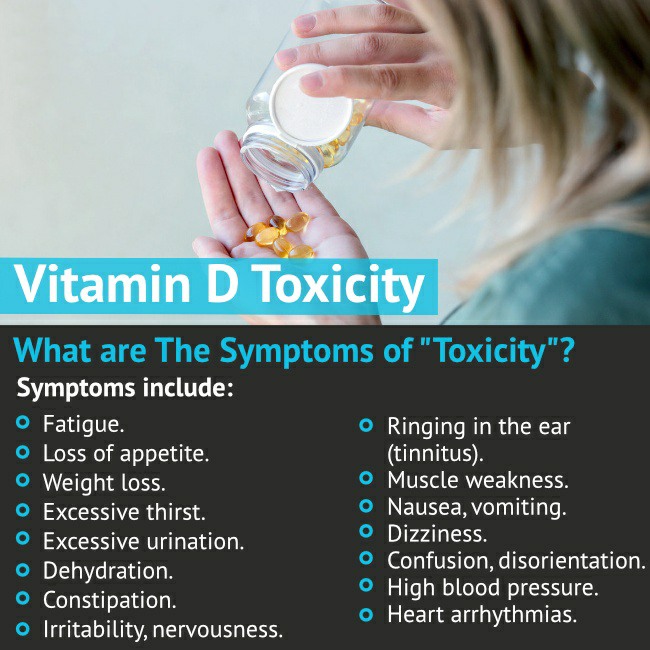
Most people with hypercalcemia do not have symptoms at first. But when symptoms do appear—especially after high doses taken over a long time or a very large dose over a short time—they can include:
- Digestive troubles: nausea, vomiting, poor appetite, constipation
- Increased thirst
- Increased urination
- Muscle weakness or twitches
- Fatigue or feeling extremely tired
- Confusion
- Bone pain
- Bone loss or fragile bones that might be prone to breakage
- High blood pressure
You might experience more severe side effects with higher doses—mainly weekly 20,000 to 50,000 IU dosing. The 50,000 IU weekly dose is the highest commonly prescribed dose. Interestingly, long-term supplementation of vitamin D3 in doses ranging from 5,000 to 50,000 IU appears safe when taken correctly and monitored.
Higher doses are typically prescribed to people whose bodies do not adequately process vitamin D due to health conditions such as:
- Asthma
- Psoriasis
- Rheumatoid arthritis
- Rickets
- Tuberculosis
In these cases, higher doses are used to correct or prevent deficiency, but they still require careful supervision.
🧬 Who is more susceptible to vitamin D overdose?
Vitamin D toxicity is more common in people who have certain medical conditions, including:
- Granulomatous disorders: Conditions that cause granulomas (masses of cells in inflamed or infected areas), such as:
- Sarcoidosis
- Granulomatosis with polyangiitis
- Cat scratch disease
- Some fungal infections
- Congenital disorders: Disorders present at birth, such as:
- Spina bifida
- Congenital heart disease
- Lymphomas: Cancers of the lymphatic system
- Dysregulated vitamin D metabolism: In these cases, vitamin D intake can lead to asymptomatic hypercalcemia even at doses that are normally considered safe. The body becomes hypersensitive to vitamin D.
In people with dysregulated vitamin D metabolism, vitamin D intake raises the concentration of vitamin D in the body more than expected, increasing the risk of toxicity.
❤️ Rare symptoms and longer-term risks from vitamin D supplements
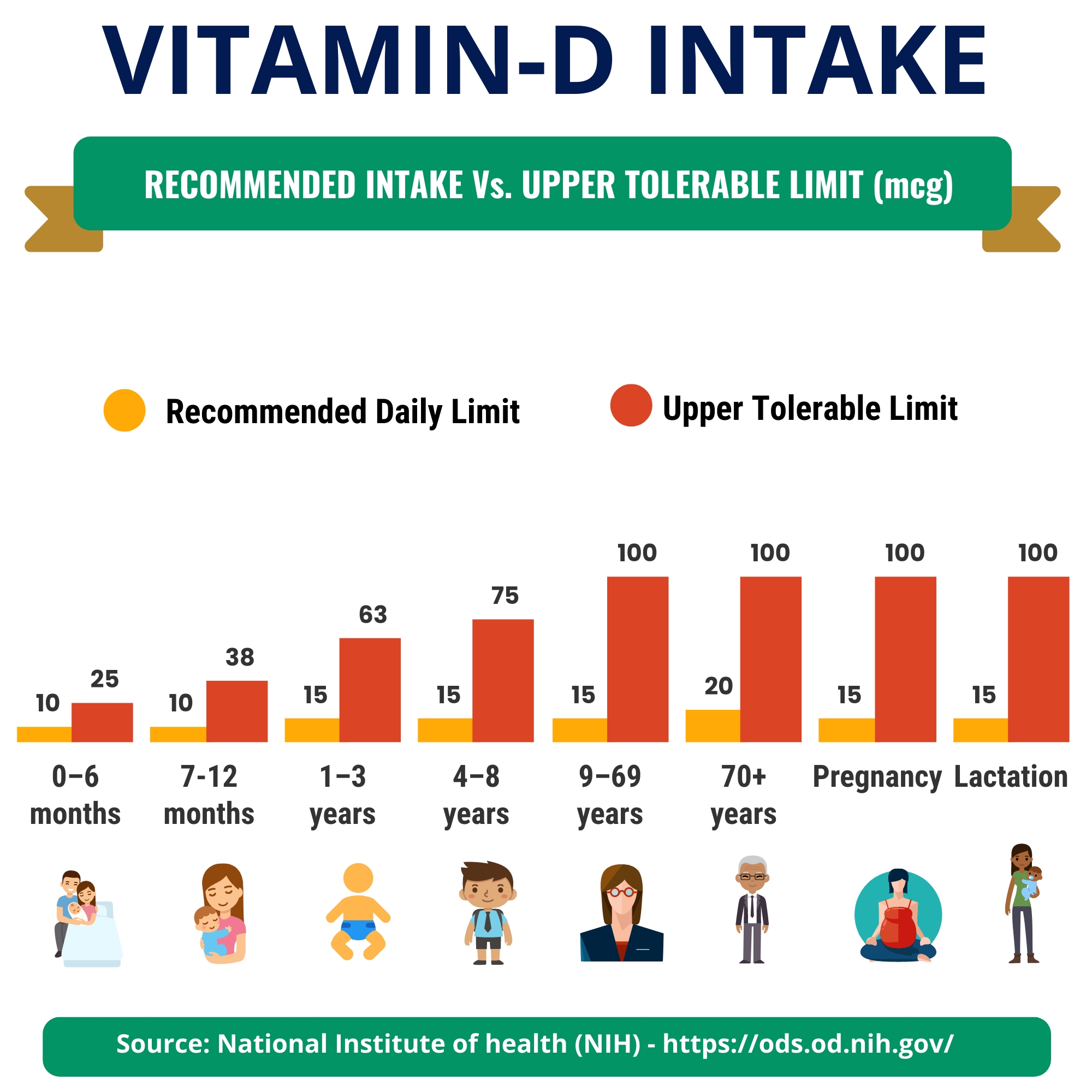
According to the National Institutes of Health, the daily recommended dose for children ages 1 to 18 and adults is 600 IU. The numbers are lower for babies and higher for adults over age 70. Healthcare providers may prescribe higher or lower doses based on specific health concerns.
Supplementing with vitamin D can lead to side effects and, in rare cases, longer-term problems, such as:
- Abnormal heart rhythms: High calcium levels can interrupt the electrical activity and contractions of the heart, leading to changes in heart rate patterns.
- Kidney troubles: This includes kidney stones, kidney damage, and kidney failure.
- Calcification (hardening): High calcium levels can lead to calcium deposits in the kidneys, heart, arteries, and other tissues.
If you take high doses of vitamin D and experience symptoms of hypercalcemia, your healthcare provider can order blood work to check:
- Vitamin D levels
- Calcium levels
- Phosphorus levels
A phosphorus test helps determine if there is kidney damage.
Healthcare providers often consider vitamin D levels low if a person has 20 nanograms (ng) per milliliter (mL) of blood or lower. If levels rise above 50 ng/mL, you might experience adverse effects.
🧠 Complications: mental state & kidneys
For some, vitamin D overdose or toxicity leads to severe complications, especially involving the brain and kidneys.
Altered mental state
Hypercalcemia related to vitamin D toxicity can alter a person’s mental state. Symptoms may include:
- Confusion
- Depression
- Psychosis
In rare cases, a coma might occur.
A 2021 Clinical Nephrology—Case Studies report described a 64-year-old man who accidentally took 200,000 IU of vitamin D because he misunderstood the medication instructions. He developed an altered mental state and other severe hypercalcemia symptoms.
He was agitated and confused for the first 10 days of his hospital stay, but his symptoms improved as his calcium levels dropped. It took 18 days for his calcium levels to return to normal.
Kidney problems
Vitamin D toxicity can lead to:
- Kidney injury
- Kidney failure
Too much vitamin D causes high calcium levels, which can lead to:
- Water loss from excessive urination
- Kidney calcification
- Blood vessel constriction
- Decreased kidney function
In people with existing kidney disease, this can cause severe complications such as:
- Anemia (reduced red blood cells)
- Bone weakness
- Severe swelling from fluid retention

💧 “Vitamin D flush”: hype or helpful?
You may have heard the term “vitamin D flush”—the idea that you can quickly remove excess vitamin D from the body. In reality, there is no quick flush.
The first and most important step is to stop taking vitamin D and calcium supplements.
Management of vitamin D toxicity typically involves three stages:
- Stabilization and supportive therapies
- May include intubation, intravenous fluids, and intensive care for people with extremely high vitamin D and calcium levels.
- Correction of hypercalcemia
- Using medications such as:
- Loop diuretics
- Bisphosphonates
- Glucocorticoids
- Calcitonin (a bone hormone drug)
- Using medications such as:
- Renal replacement therapies
- If the kidneys have been significantly affected.

👩⚕️ When to see a provider
If you are taking vitamin D supplements—or a prescribed higher dose—and start to experience signs of hypercalcemia, let your healthcare provider know. Symptoms to watch for include:
- Digestive problems (nausea, vomiting, constipation)
- Loss of appetite
- Excessive thirst
- Frequent urination
- Fatigue
- Confusion
- Heart rhythm changes
- Bone pain or unusual fractures
Your provider will likely request blood work to check:
- Vitamin D levels
- Calcium levels
- Possibly phosphorus and kidney function
Depending on the results, they may:
- Reduce your vitamin D dose
- Temporarily stop supplements
- Investigate underlying conditions

🥗 Getting vitamin D via diet (and understanding IU vs. mcg)
For many people, a well-balanced diet with good vitamin D sources may be enough to meet the daily recommended 600 IU (15 mcg).
Helpful conversions:
- 1 microgram (mcg) = 40 IU of vitamin D
- 10 mcg = 400 IU
- 15 mcg = 600 IU
- 20 mcg = 800 IU
- 100 mcg = 4,000 IU
Dietary sources plus moderate sun exposure can often cover your needs, especially if you’re not in a high-risk group for deficiency.

🌿 Final thoughts
Vitamin D is essential for health—but it works best in balance, not extremes. While vitamin D toxicity is rare, it is real, and it almost always comes from supplements taken in excessive doses or for too long.
Common signs of trouble include digestive issues, fatigue, appetite loss, frequent urination, high blood pressure, and heart or mental changes. More serious complications can affect your brain and kidneys, especially if underlying conditions are present.
To reduce your risk:
- Avoid high doses unless clearly prescribed
- Do not start or increase supplements without professional guidance
- Get your blood work checked regularly if you’re on higher doses
- Pay attention to how you feel—and speak up if something seems off
“The goal isn’t just to take vitamin D—it’s to take the right amount for you.”
➡️ Your Next Step
If you’re unsure whether your vitamin D levels are helping or harming, or how your body is actually handling nutrients, a Total Wellness Session (Remote or In-Clinic) with a full Body‑Field scan can can offer deeper insight.
At Juneva Health, we look beyond single lab values to see how your entire system is communicating and regulating. Together, we can:
- Review your current supplements and dosing
- Identify stress patterns in your body-field
- Create a personalized plan to support bone, kidney, and overall health
If you’re ready to understand what your body is actually asking for — not through guesswork, but through measurable bioenergetic data — then it may be time for your next step.
It’s one of the most effective ways to understand why your body behaves the way it does and how to support it from the inside out.
“Your body already knows what it needs.
We simply help you listen.”
Body-Field Scan
Ready to find out what’s impacting your energy levels by using our bioenergetic scanning technology. Check out your body’s energy with a Body-Field scan and gain deeper insight into your holographic self with our certified Bioenergetic Practitioner. For an In-Clinic visit click here, or, for a Telehealth (remote) session click here.
We offer a completely new, alternative and bioenergetic healthcare approach based on 21st century science, technology and quantum physics with personalized, holistic therapy solutions such as, our unique BioScalar Infusion℠ therapy, Bioenergetic body-field scan technology, miHealth biofeedback, PEMF, Rife and Vibroacoustic (VAT) therapies that can restore optimal health and well-being throughout the body, mind and spirit in the most natural way. Let us help you restore your health and energy!