




May
When the Night Turns Against You
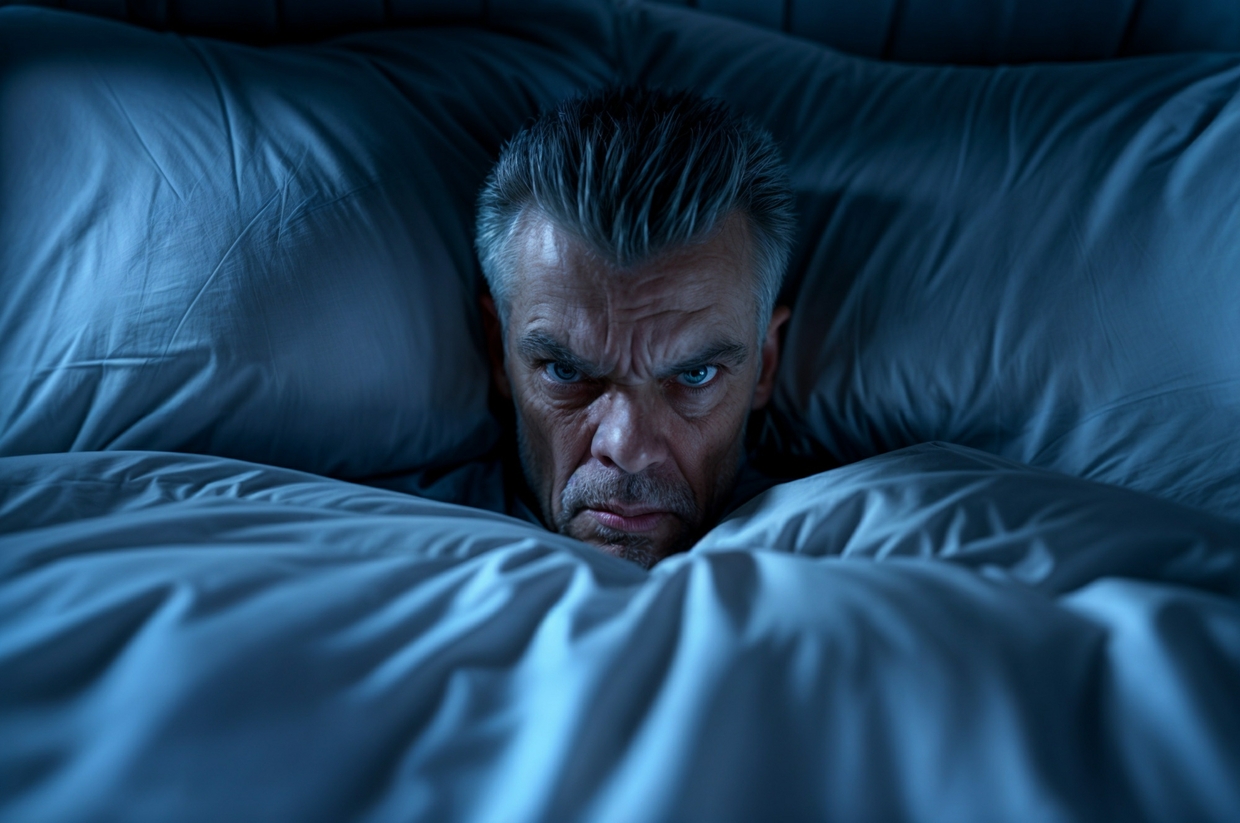
It’s one of the most frustrating experiences: you fall asleep easily (or finally), only to bolt awake around 3 AM — alert, restless, mind racing, body humming as if someone flipped on an internal switch. You’re not imagining it. And you’re not alone.
This pattern is so common it has a name: the stress‑cortisol 3 AM waking loop.
And the truth is both reassuring and empowering:
“Your body isn’t malfunctioning — it’s communicating.”
This article unpacks what’s really happening, why it keeps repeating, and how to break the cycle naturally using a blend of science, lifestyle, and bioenergetic insights.

🧠 Myth‑Busting: What 3 AM Wake‑Ups Are Not
❌ Myth 1: “My body just hates sleep.”
Your body is not broken — it’s responding to a predictable biochemical pattern. Something is disrupting the rhythm — and rhythms can be restored.
❌ Myth 2: “It’s just aging.”
Age doesn’t cause 3 AM cortisol spikes. Stress patterns, blood sugar dips, and circadian disruption do — and it is reversible.
❌ Myth 3: “I need stronger sleep supplements.”
Sedatives may knock you out, but they don’t fix the underlying cortisol timing issue.
❌ Myth 4: “It’s insomnia.”
This is not classic insomnia. It’s a timing problem, not a sleep‑initiation problem.
Most 3 AM wake‑ups are not a sleep disorder — they’re a stress‑response pattern.
🌿 What’s Actually Happening at 3 AM
Your body follows a 24‑hour hormonal rhythm. Cortisol — your alertness and stress hormone — is supposed to:
- Stay low at night
- Begin rising gently between 3–6 AM
- Peak in the morning to help you wake naturally
But when stress, blood sugar instability, or emotional overload are present, cortisol rises too early, triggering a sudden wake‑up.
This creates a loop:
Stress → early cortisol spike → 3 AM wake‑up → next‑day fatigue → more stress → repeat


🔍 The Most Common Root Causes (Explained Simply)
1. Low Nighttime Blood Sugar
If your blood sugar dips too low overnight, your body releases cortisol as an emergency energy signal. This is one of the most common — and most overlooked — triggers.
Signs this is your pattern:
- Light dinners
- Long gaps between meals
- Waking hungry
- Feeling shaky or wired at night
2. High Evening Cortisol
Late‑night work, emotional conversations, screens, or mental rumination keep cortisol elevated at bedtime. When cortisol doesn’t drop properly at night, it rebounds early.
Signs this is your pattern:
- Hard time winding down
- Busy mind at bedtime
- Feeling “tired but wired”
3. Nervous System Hypervigilance
Chronic stress, trauma, or burnout can keep the brain in a state of “night watch.” This makes the body more sensitive to even small cortisol shifts.
“A vigilant nervous system doesn’t sleep deeply — it sleeps defensively.”
4. Hormonal Shifts
Changes in progesterone, estrogen, or thyroid function can destabilize nighttime cortisol. This is especially common in perimenopause.
5. Overheating at Night
Heat is a cortisol trigger. Even a few degrees too warm can wake you.
🌿 A Natural Plan to Break the 3 AM Cortisol Loop
This plan works because it addresses the root causes, not just the symptoms.
1. Balance Blood Sugar Before Bed
A small protein + healthy fat snack 30–60 minutes before bed helps keep blood sugar stable through the night.
Examples:
- Almond butter on apple slices
- Greek yogurt with nuts
- Turkey roll‑ups
- Cottage cheese with berries
2. Lower Evening Cortisol
Your body needs a clear signal that the day is ending.
Try:
- Dim lights after 8 PM
- Warm shower or bath
- Gentle stretching
- No screens 60 minutes before bed
- Avoid intense conversations or work late at night
“Evening is not a time to solve problems — it’s a time to release them.”
3. Reset Your Morning Cortisol Curve
What you do in the morning determines how your cortisol behaves at night.
- Get 10–15 minutes of natural light within 30 minutes of waking
- Delay caffeine for 60–90 minutes
- Hydrate immediately upon waking
This retrains your cortisol rhythm so it rises at the right time.
4. Cool Your Sleep Environment
Aim for:
- Bedroom temperature around 65–67°F
- Breathable bedding
- Avoid heavy blankets if you tend to overheat
5. Support the Nervous System
A calm nervous system = stable nighttime cortisol.
Helpful practices:
- Slow nasal breathing (4‑second inhale, 6‑second exhale)
- Legs‑up‑the‑wall for 5 minutes
- Journaling to “offload” thoughts before bed
- Gentle meditation or guided relaxation

🌿 Herbal & Nutritional Support
These natural supports help regulate stress, calm the nervous system, and stabilize nighttime cortisol.
Adaptogens for Stress Regulation
- Ashwagandha – supports healthy cortisol rhythms
- Holy Basil – calming, supports emotional balance
- Rhodiola – helps regulate stress response
Nervous System Calmers
- Chamomile – gentle relaxation
- Lemon Balm – supports calm and sleep quality
- Passionflower – helps quiet a busy mind
Blood Sugar Support
- Cinnamon – supports stable glucose
- Chromium – helps maintain healthy blood sugar levels
Minerals for Deep Sleep
- Magnesium glycinate – supports muscle relaxation and nervous system balance

🌙 What to Do During a 3 AM Wake‑Up
If you wake up, use this simple reset:
- Don’t check the clock — it spikes cortisol.
- Slow nasal breathing (4‑in, 6‑out).
- Relaxation cue: “Nothing is required of me right now.”
-
If awake more than 15 minutes:
- Sip water
- Read something calming under dim light
This prevents your brain from associating 3 AM with stress.
💛 A Deeper Bioenergetic Perspective
From a bioenergetic standpoint, 3 AM wake‑ups often reflect disturbances in the body‑field’s stress pathways, especially those linked to:
- Adrenal energetics
- Emotional stress memory
- Sleep‑cycle regulation
- Energetic flow through liver and detox pathways
- Shock and trauma fields
- Energetic oscillations between sympathetic and parasympathetic states
When these pathways are out of balance, the body struggles to maintain a smooth nighttime rhythm — leading to early cortisol spikes and sudden wakefulness.
A Body‑Field Scan can help identify where stress patterns, energy blocks, or emotional imprints are disrupting your sleep cycle and guide personalized corrections.
The Infoceuticals NIGHT, CHILL and ED-4 Nerve can often help with regaining better sleep patterns by addressing circadian rhythm disturbances, nervous system and mind patterns.
“When the body‑field is balanced, sleep becomes effortless — not something you chase.”

⭐ Final Thought
Your 3 AM wake‑ups are not random. They’re a message — a signal that your body is trying to rebalance itself. When you support your stress pathways, stabilize blood sugar, and restore your natural cortisol rhythm, the night becomes peaceful again.
And if you’re ready to go deeper:
➡️ Your Next Step
A Total Wellness Session (Remote or In-Clinic) with a full Body‑Field scan can help uncover the energetic stress patterns behind your sleep disruption and guide a personalized plan to restore balance — naturally, gently, and holistically.
It’s one of the most effective ways to understand why your body behaves the way it does and how to support it from the inside out.
“Your body is ready for deeper rest.
We’re here to help you reclaim it.”
Body-Field Scan
Ready to find out what’s impacting your energy levels by using our bioenergetic scanning technology. Check out your body’s energy with a Body-Field scan and gain deeper insight into your holographic self with our certified Bioenergetic Practitioner. For an In-Clinic visit click here, or, for a Telehealth (remote) session click here.
We offer a completely new, alternative and bioenergetic healthcare approach based on 21st century science, technology and quantum physics with personalized, holistic therapy solutions such as, our unique BioScalar Infusion℠ therapy, Bioenergetic body-field scan technology, miHealth biofeedback, PEMF, Rife and Vibroacoustic (VAT) therapies that can restore optimal health and well-being throughout the body, mind and spirit in the most natural way. Let us help you restore your health and energy!