



Jan
Americans purchase more than 15 billion gallons of bottled water each year — often believing it to be the cleaner, safer choice. But new research suggests that every sip may contain far more than just water.
A recent study published in the Proceedings of the National Academy of Sciences found that a single liter of bottled water can contain up to 370,000 plastic particles, most of them so small they were previously undetectable.
As one of the study’s authors, Beizhan Yan, PhD, an environmental chemist at Columbia University’s Lamont-Doherty Earth Observatory, in a news release, put it:
“This opens a window where we can look into a world that was not exposed to us before.”
These findings raise important questions about what we’re really consuming — and what it may mean for long‑term health. Below, we break down the types of plastics found in bottled water, what experts know (and don’t yet know) about their effects, and how you can reduce your exposure.

What Types of Plastics Are in Bottled Water?
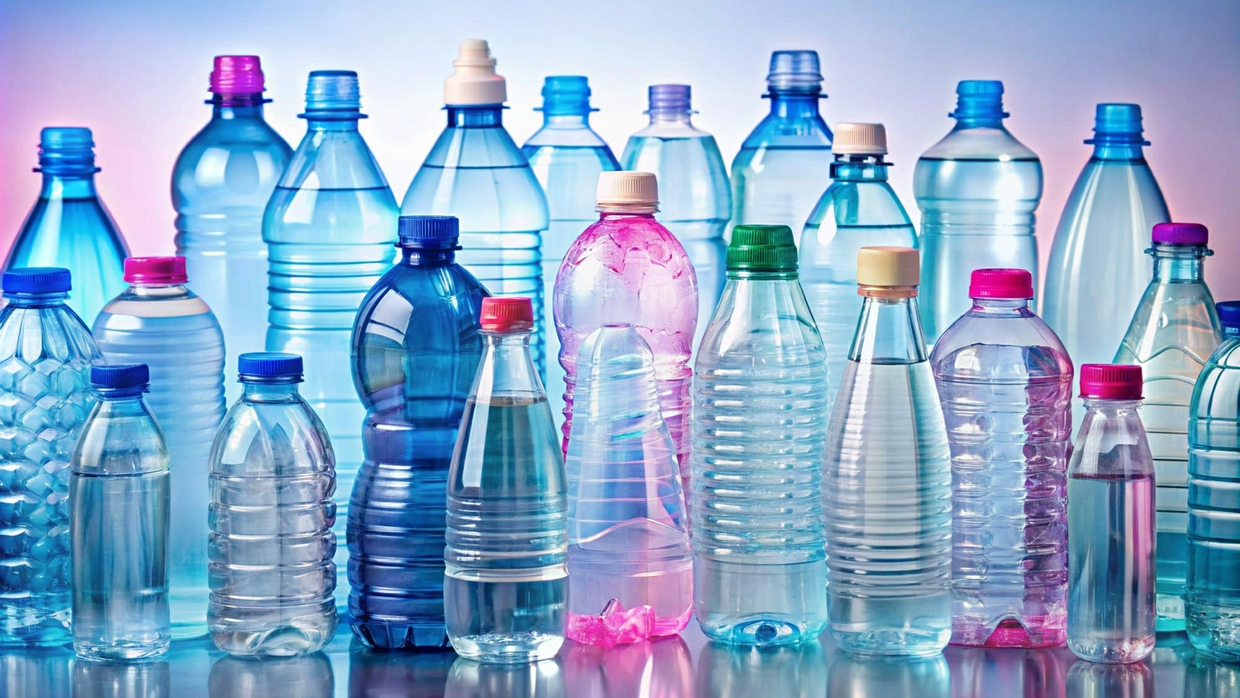
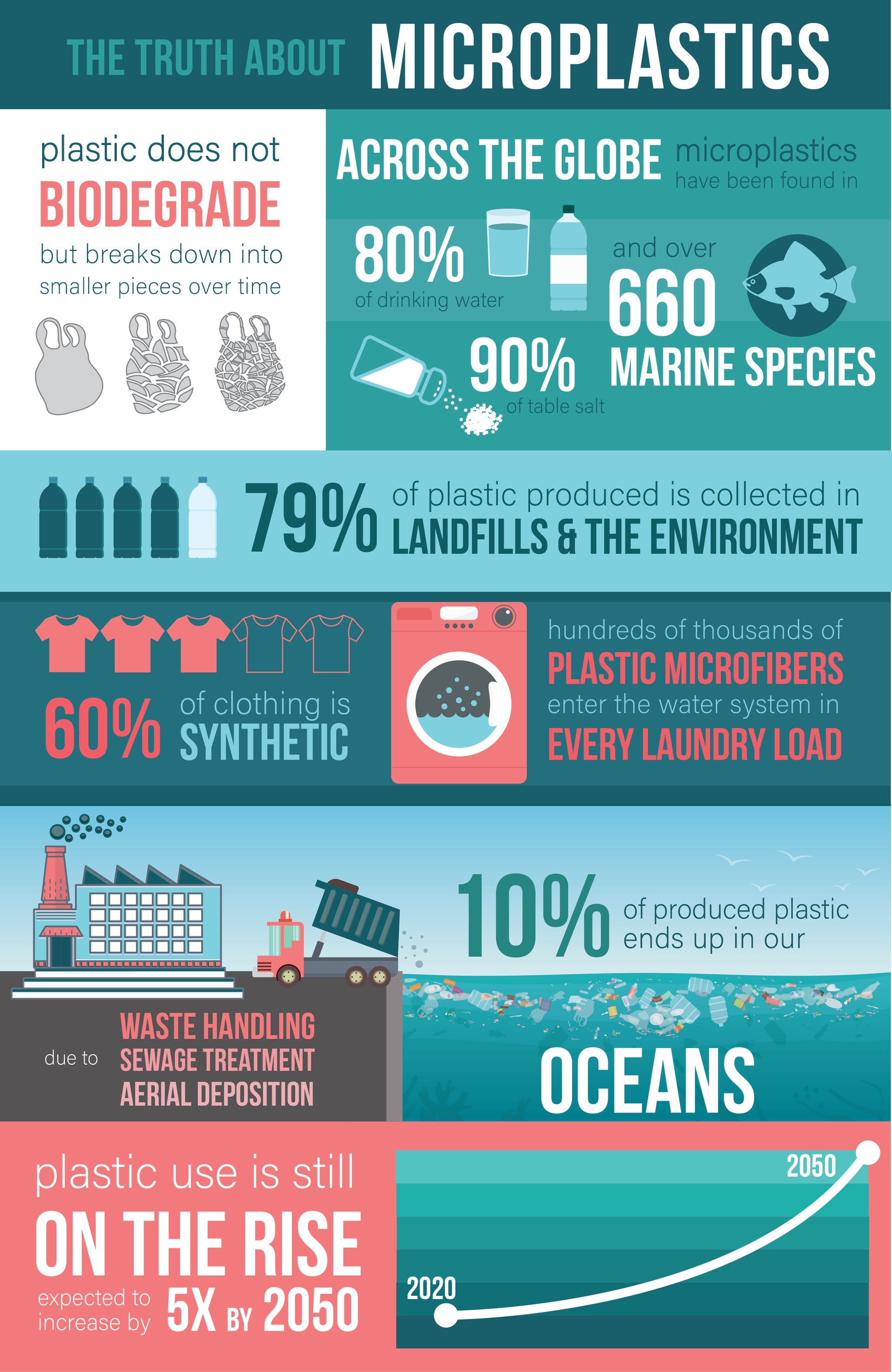
The study found that bottled water contains a mix of microplastics (particles smaller than 5 millimeters) and nanoplastics (particles so tiny they can slip between cells). Using advanced imaging technology, researchers identified several common types, including PET (from the bottle itself), nylon, and polystyrene.
What surprised scientists most wasn’t just the presence of these particles — it was the sheer number of them. The researchers tested three popular bottled water brands sold in the U.S. but declined to name which ones. In each liter, which is equivalent to about 4 cups, they found 110,000 to 370,000 particles.
Traditional testing methods had dramatically underestimated how much plastic is actually in bottled water.
As environmental chemist Beizhan Yan, PhD, explained:
“We’re now seeing particles that were invisible to us before.”
About 90% of the particles identified in the water were nanoplastics and 10% of them were microplastics, the authors wrote.
Microplastics are small plastic pieces that range in size from 1 micron to 5 millimeters in diameter. At the larger end of the spectrum, they can be about the size of a pencil eraser, according to the National Ocean Service.
Nanoplastics are even smaller, ranging in size from 1 nanometer to 1 micron, Anna Marie LaChance, PhD, lecturer in the Department of Chemical Engineering at the University of Massachusetts Amherst, told Verywell in an email.
“For perspective, human hair ranges from 50 to 120 microns wide,” LaChance said.
The researchers also found other common plastics in bottled water, including:
- Polyethylene terephthalate (PET)
- Polyamide 66 (PA)
- Polypropylene (PP)
- Polyethylene (PE)
- Polystyrene (PS)
- Polyvinyl chloride (PVC)
- Polymethyl methacrylate (PMMA)
“There is a huge world of nanoplastics to be studied,” Wei Min, PhD, study coauthor and Columbia biophysicist, said in a news release.
“It’s not size that matters. It’s the numbers, because the smaller things are, the more easily they can get inside us.”
Are These Plastics Harmful to Your Health?
Researchers are still working to understand exactly how microplastics and nanoplastics affect the human body, but early findings raise legitimate concerns. Because nanoplastics are so small, they may be able to cross biological barriers, enter the bloodstream, and interact with cells in ways scientists are only beginning to map out.
Animal studies suggest these particles may contribute to inflammation, oxidative stress, and disruptions in hormone signaling. Human studies are limited, but researchers worry that long‑term exposure — especially from daily consumption — could have cumulative effects.
As environmental health scientist Phoebe Stapleton, PhD, noted:
“We don’t yet know the full impact, but the potential for harm is real.”
According to the Environmental Protection Agency, two types of chemicals commonly found in water, called PFOA and PFOS, are hazardous to human health in doses as small as 0.004 and 0.02 parts per trillion. These “forever chemicals” are found in many commercially manufactured products because of their durability and nonstick properties.
Why These Chemicals Matter
Bisphenol A (BPA), an industrial chemical used to make many plastic water bottles, can cause adverse reproductive effects at doses as low as 2 micrograms per kilogram of body weight per day, LaChance said.
These chemicals are so harmful because they are endocrine-disrupting chemicals. Because of the way our endocrine system works, even one molecule of these chemicals can enter our bloodstream, mimic a hormone, adhere to a hormone receptor, and wreak havoc on our bodies,” said LaChance. “Many suspect that regular consumption of beverages from PET [polyethylene terephthalate—clear, strong, plastic] bottles may be contributing to wide-scale reproductive toxicity.”
Other evidence adds to the list of potential health effects of microplastics and nanoplastics, such as reproductive toxicity, neurotoxicity, oxidative stress, carcinogenicity, altered metabolism, reproductive abnormalities, gastrointestinal dysfunction, increased mortality, and more, said LaChance.
Can You Filter Plastic Particles Out of Water?
Why Filtering Plastics Is So Difficult
Filtering out microplastics is challenging — and filtering out nanoplastics is even harder. Most home filtration systems, including common carbon filters, are not designed to capture particles this small. Even high‑quality filters that reduce contaminants like chlorine or heavy metals may not be able to remove the tiniest plastic fragments identified in recent studies.
By the time bottled water has been packaged, shipped to a store, and purchased, the microplastics and nanoplastics are already present in the product, LaChance said. There isn’t much you can do to get rid of them at that point.
“Pouring it into a glass or another bottle will not help,” said LaChance. “Boiling the water does not help in this case; that is done to kill bacteria, which doesn’t apply here.”
Filtration can help, but not all filters remove microplastics, and only a few remove nanoplastics.
“Filters are usually classified by the size of particle they can remove,” said LaChance. “For example, a 5-micron filter will remove microplastics that are 5 microns and larger, but nothing smaller.”
Tools like adsorbents, which bind to nanoplastics, can help, but most consumer water filters don’t use these methods, said LaChance.
“Our water needs to have its nanoplastics removed at the source and dealt with at the public scale: in our wastewater treatment plants,” she said.
What Advanced Filtration Systems Can Do
Some advanced filtration systems, such as reverse osmosis, can reduce microplastics significantly. These systems force water through a semipermeable membrane that blocks many contaminants, including some plastic particles. However, they are expensive, require maintenance, and may waste water during the filtration process.
Researchers emphasize that while filtration can help, it’s not a perfect solution — especially when the particles are measured in billionths of a meter. Even the best systems struggle with the smallest nanoplastics.
As environmental toxicologist Denise Hardesty, PhD, noted:
“We’re dealing with particles so small that even our best tools struggle to detect them, let alone remove them.”
Older Water Bottles May Be Worse
Age matters when it comes to plastic bottles. As bottles sit on shelves, in warehouses, or in warm environments like cars and garages, the plastic begins to break down. This natural degradation can increase the amount of microplastics and nanoplastics that leach into the water over time.
Heat accelerates the process. Studies show that when plastic bottles are exposed to higher temperatures — such as being left in a hot car — they release significantly more particles. Even repeated handling, squeezing, or reusing single‑use bottles can contribute to additional shedding.
As polymer scientist Rong Yang, PhD, explains:
“Plastic doesn’t stay stable forever. With time and heat, it starts to shed.”
How to Minimize Your Exposure to Plastic Particles
While you may not be able to avoid plastics entirely, but here are some practical steps experts recommend:
- Switch to glass or stainless-steel. Instead of storing food in plastic Tupperware or drinking from plastic bottles, consider using glass or stainless-steel alternatives. Switch to reusable water bottles made of stainless-steel or glass. Be sure to wash these regularly to avoid bacterial growth.
- Use filters. In your home, consider using charcoal filters, which can help remove some contaminants from tap water. Other more expensive options include reverse osmosis filters, which may be able to remove PFAS and other plastic-like contaminants.
- Choose reusable items. Ditch plastic bags, straws, utensils, and other single-use plastics. Carry reusable shopping bags, avoid plastic produce bags, and avoid using plastic utensils and straws whenever possible.
- Avoid microwaving in plastic. Refrain from microwaving any of your food or beverages in plastic containers, since heat can lead to the release of plastic chemicals like BPA and phthalates into your food.
- Store bottles properly. Keeping them out of hot cars, garages, or direct sunlight can help limit plastic breakdown.
As environmental researcher Sherri Mason, PhD, emphasizes:
“Reducing plastic exposure isn’t about perfection — it’s about making better choices where you can.”
But truly, the best thing to do would be to take part in collective action to get governments and businesses to care about this issue.

Final Thought
Microplastics and nanoplastics in bottled water highlight a growing reality: even everyday products we trust may carry hidden exposures. While researchers continue to uncover how these particles interact with the human body, the evidence so far suggests that minimizing contact where possible is a wise step toward long‑term health.
As environmental researcher Sherri Mason, PhD, reminds us:
“Awareness is the first step. Once you see the issue, you can start making better choices.”
Small shifts — choosing reusable bottles, storing water properly, or filtering at home — can meaningfully reduce your daily exposure. You don’t need to overhaul your life; you just need to stay informed and take simple steps that support your well‑being.
Body-Field Scan
Ready to find out what’s impacting your energy levels by using our bioenergetic scanning technology. Check out your body’s energy with a Body-Field scan and gain deeper insight into your holographic self with our certified Bioenergetic Practitioner. For an In-Clinic visit click here, or, for a Telehealth (remote) session click here.
We offer a completely new, alternative and bioenergetic healthcare approach based on 21st century science, technology and quantum physics with personalized, holistic therapy solutions such as, our unique BioScalar Infusion℠ therapy, Bioenergetic body-field scan technology, miHealth biofeedback, PEMF, Rife and Vibroacoustic (VAT) therapies that can restore optimal health and well-being throughout the body, mind and spirit in the most natural way. Let us help you restore your health and energy!